Humidity As you can imagine from it, what are we going to talk about today? Those who want to know the amount of water in the air in relation to the maximum amount of water vapor (humidity), and how they are measured, then for that, definitely take a look at the US humidity map. which we have defined below
List of US Map Humidity :
1. U.S Humidity Map:

2. U.S Humidity Map Average:

3. U.S Humidity Temperature Map:
4. Humidity Map of USA :

5. U.S Humidity Map Annual:
6. U.S Humidity Weather Map:

7. U.S Humidity Map 1905:
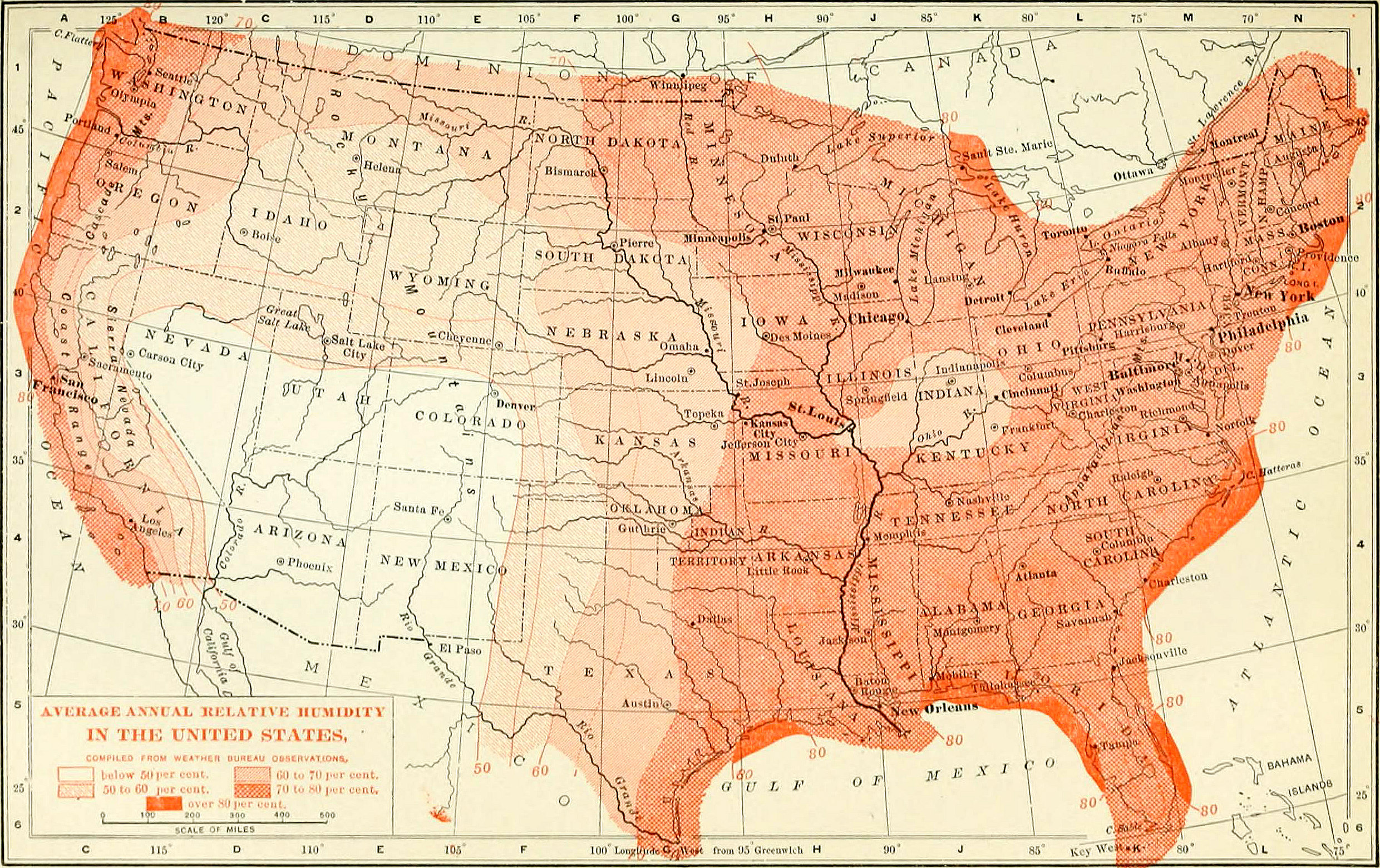
We have defined 7 types of maps above, which you all must have seen. To enhance your knowledge, we would like to tell you that humidity is the concentration of water vapor present in the air. Water vapor, the gaseous state of water, is generally invisible to the human eye. The United States humidity map indicates the likelihood of rain, dew, or fog present. The higher the temperature, the more quickly the air can hold water vapor. The relative humidity is what your morning weather reporter will refer to.
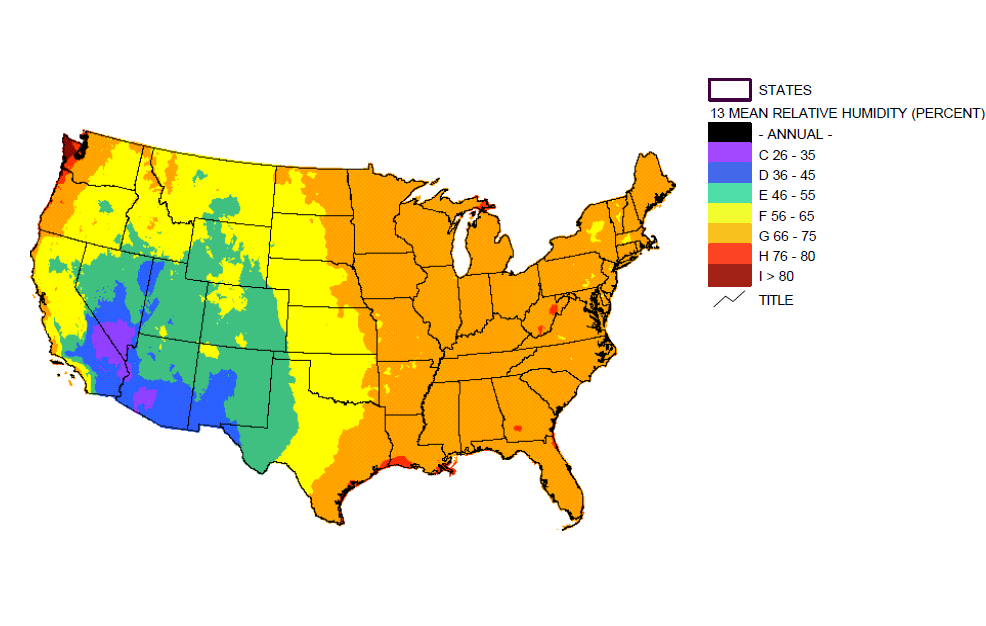
The Humidity Map will show the climatic conditions and how humid the weather is in which region of the country. The word by which the value of humidity is presented is called humidity. As you can see in our image 6th. So that you can get to know about the climatic conditions as well as the humidity level in the season of a particular area.
Humidity is divided into two parts: first, it can be measured by how the current weather conditions are going, and second in terms of humidity and other climatic factors. Those people in the humidity map US who are planning to go out or do some outdoor activities. It is a wise decision to check the humidity level before heading out. You can find out through our maps.
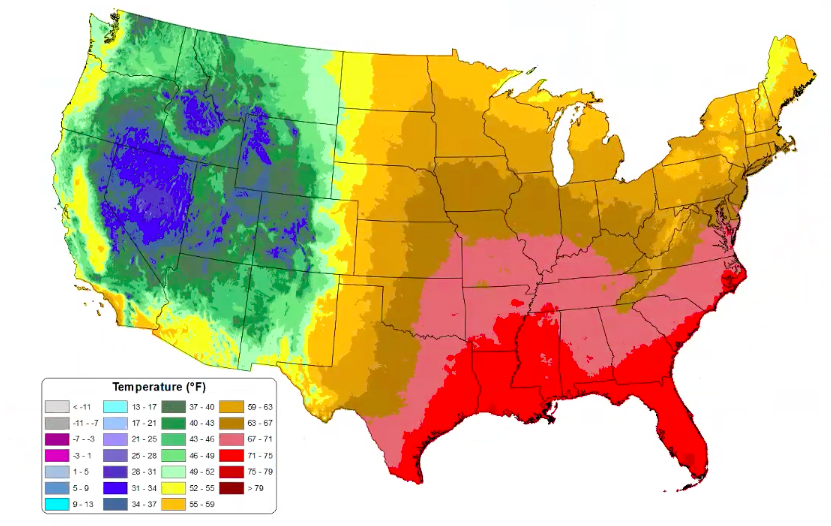
Many times you need to know the previous figures also, you do not need to worry about it because for this we have already shown the 7th image in front of you. With which you can know the past data of humidity. If you are interested to know about humidity temperature then be sure to check out our 3rd image.
This humidity map of US is also useful for researchers who are doing their research on an area or state and want to know about the trend and climate of that area. So while doing research on weather and climate, definitely study our given map. So that there is no hindrance in organizing any of your events. Because apart from just one outing, many other things can be affected by moisture, such as pouring concrete, painting, woodworking, etc.
If you plan on such an activity, be sure to check the humidity map so that your schedule is not spoiled by damp weather. You can use all these humidity map of united states according to your need and can also download them without any payment.
Average Humidity by State in the USA
The humidity levels vary significantly across different US states. Here is an overview of average relative humidity levels by state:
| State | Average Humidity | Level |
| Alaska | 77% | Very High |
| Florida | 74% | Very High |
| Louisiana | 74% | Very High |
| Mississippi | 73% | High |
| Hawaii | 73% | High |
| Alabama | 71% | High |
| Georgia | 69% | High |
| South Carolina | 69% | High |
| Tennessee | 68% | High |
| North Carolina | 68% | High |
| Texas | 64% | High |
| California | 61% | Moderate |
| New York | 62% | Moderate |
| Illinois | 65% | Moderate |
| Colorado | 54% | Low-Moderate |
| Arizona | 38% | Low |
| Nevada | 29% | Very Low |
| New Mexico | 45% | Low |
Most Humid States: Florida, Louisiana, Mississippi, and Alabama are consistently the most humid states in the continental USA.
Least Humid States: Nevada, Arizona, and New Mexico have the lowest humidity levels, making them the driest states in the country.
Humidity by US Region
Southeast (Most Humid Region): The Southeast is the most humid region in the United States. States like Florida, Louisiana, Georgia, and Alabama have high humidity throughout the year due to their proximity to the Gulf of Mexico and the Atlantic Ocean. Summer months can feel extremely uncomfortable, with humidity levels often above 70%.
Northeast: The Northeast experiences moderate to high humidity, especially during the summer months. States like New York, New Jersey, and Massachusetts see humidity rise in July and August. Winters are cold and dry.
Midwest: The Midwest has moderate humidity levels. States like Illinois, Indiana, and Ohio experience humid summers but drier winters. The Great Lakes contribute to higher humidity in surrounding areas.
Southwest (Driest Region): The Southwest is the driest region in the USA. Arizona, Nevada, and New Mexico have desert climates with very low humidity throughout the year. Phoenix, Arizona, often sees humidity levels below 20% in summer.
West Coast: The West Coast has varied humidity. Coastal areas of California, Oregon, and Washington have moderate humidity due to Pacific Ocean breezes. Inland areas are much drier.
Frequently Asked Questions (FAQ)
Q1: Which US state has the highest humidity?
Florida, Louisiana, and Mississippi are consistently the most humid states in the USA, with average relative humidity often above 70-74% throughout the year.
Q2: Which US state has the lowest humidity?
Nevada is the least humid state in the USA, with an average relative humidity of around 29%. Arizona and New Mexico are also among the driest states in the country.
Q3: What is relative humidity?
Relative humidity is the percentage of water vapor present in the air compared to the maximum amount of water vapor the air can hold at a given temperature. A reading of 100% means the air is completely saturated.
Q4: Which season is most humid in the USA?
Summer (June to August) is the most humid season across most of the United States, especially in the Southeast and Midwest regions.
Q5: Can I download these humidity maps for free?
Yes! All 7 humidity maps are completely free to download. Click the PDF button below any map to save it to your device instantly.